Listen to Spotify Offline: Complete Guide to Download Music, Save Data, and Enjoy Music Without Internet
Streaming music is convenient, but it becomes frustrating when your internet connection is slow or unavailable. Many users want to listen to Spotify offline during flights, road trips, or in areas with poor network coverage. Offline listening solves this problem by allowing you to download songs, albums, and playlists so they play instantly without buffering or using mobile data.
Spotify has become the world’s leading music streaming platform with more than 600 million users globally and over 230 million premium subscribers. One of the most valuable features of Spotify Premium is the ability to download music and enable Spotify offline mode, giving listeners uninterrupted playback anywhere.
Download Spotify Premium MOD APK
In this guide, I will explain how to download Spotify music, enable offline listening, manage downloads, and avoid common issues. You will also learn how offline playback saves data, improves listening speed, and helps you enjoy music anytime without relying on internet connectivity.
What Does “Listen to Spotify Offline” Mean?
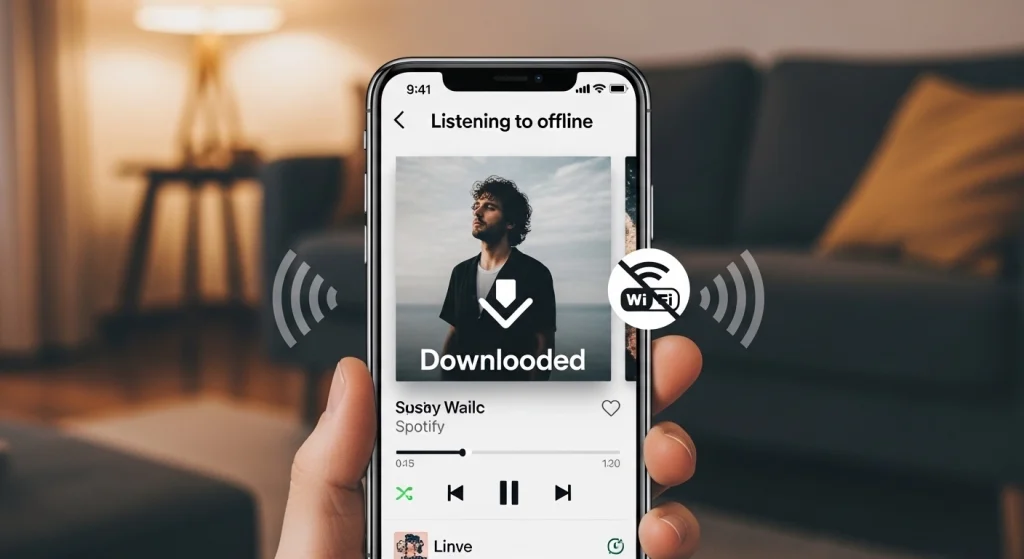
Many users rely on streaming music every day, but internet connectivity is not always reliable. This is where the ability to listen to Spotify offline becomes extremely useful. Offline listening means downloading songs, playlists, albums, or podcasts to your device so you can play them later without an internet connection. Once downloaded, the music stays available directly on your phone, tablet, or computer for uninterrupted playback.
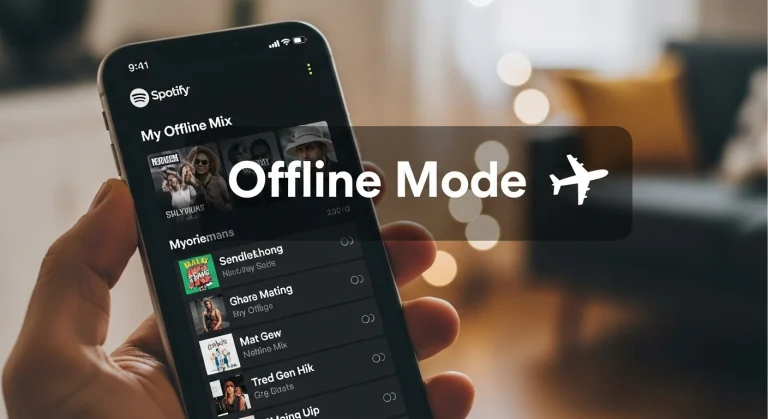
When users enable spotify offline mode, the app plays only the content that has already been downloaded to the device. This prevents Spotify from using mobile data and ensures that music continues to play even in areas with poor or no internet coverage. Millions of users worldwide use this feature during travel, flights, commuting, or in rural areas where network connectivity may be limited.
It is important to understand that offline listening is different from normal streaming. When streaming, Spotify pulls music from its servers in real time, which requires a stable internet connection and consumes data. Offline listening works differently because the music files are temporarily stored on the device after downloading.
Spotify Download Limit Per Device
Many users run into confusion with spotify download limit per device when their downloads suddenly stop working or new songs refuse to save offline. I have personally faced this issue…How to Download Playlists on Spotify Mobile
Many people search for how to download playlists on Spotify mobile because they face issues like slow internet, high data costs, or interruptions while listening. I have personally dealt with…
Another key requirement is that offline downloads are available only for Spotify Premium subscribers. Free users can stream music online but cannot download tracks for offline playback. Premium users can download thousands of songs and listen without interruptions. If you want a deeper explanation of how the platform works and why Premium features exist, you can explore Spotify Explained.
Offline listening is especially valuable for people who want better control over data usage and playback speed. Since songs are already stored on the device, playback is instant and does not depend on internet speed. This improves the overall listening experience while reducing buffering issues.
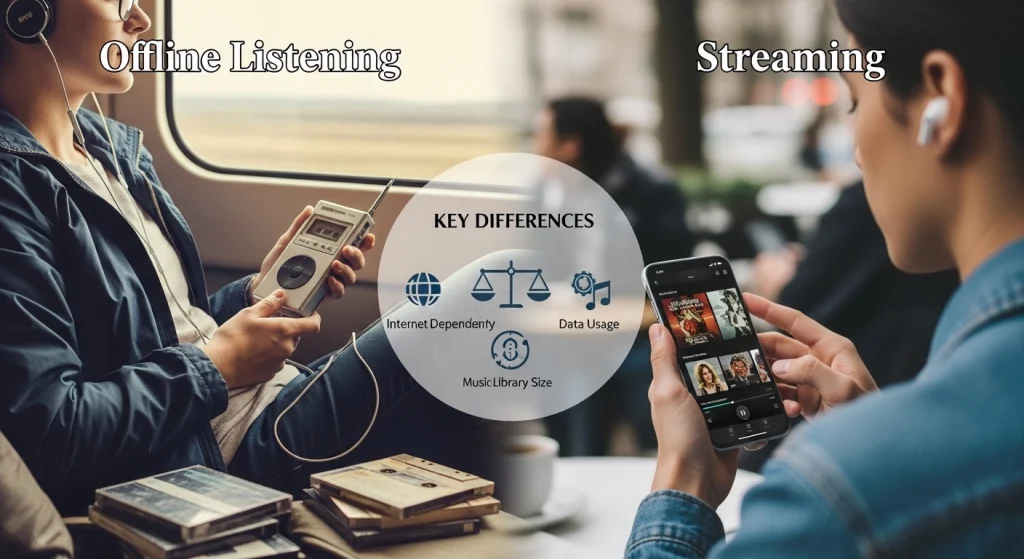
Offline Listening vs Streaming: Key Differences
To better understand the concept of spotify offline listening, it helps to compare offline playback with traditional streaming.
| Feature | Streaming | Offline Listening |
|---|---|---|
| Internet Required | Yes | No |
| Data Usage | High | None |
| Playback Speed | Depends on connection | Instant |
| Availability | Anywhere with internet | Anywhere after download |
Streaming allows users to access Spotify’s entire music catalog instantly as long as they have internet access. However, it consumes mobile data and can be affected by slow network speeds.
Offline listening removes these limitations. Once music is downloaded, songs can play anywhere without buffering, making it ideal for traveling, long commutes, and places where internet connectivity is unstable.
Many users combine offline listening with features like playlists, downloads, and smart shuffle discovery to create a personalized experience. If you want to understand how shuffle and music discovery work alongside downloads, you can read Smart Shuffle Spotify which explains how Spotify enhances music recommendations while managing playlists.
Why Millions of Users Prefer to Listen to Spotify Offline
Internet based music streaming is convenient, but it also creates several everyday problems for listeners. Slow networks, limited mobile data, and unstable connections often interrupt music playback. This is why many users choose to listen to Spotify offline, allowing them to enjoy music without relying on internet connectivity. Offline listening gives people full control over their playlists while removing buffering issues and reducing mobile data consumption.
Spotify’s massive global audience highlights the demand for this feature. With more than 600 million users worldwide, many listeners use offline downloads to maintain uninterrupted playback during travel, commuting, or work. Offline listening is especially useful for users who frequently move between different network environments where internet access may not always be reliable.
Another reason offline listening is popular is convenience. Once songs are downloaded, playback becomes instant and predictable. Users can organize playlists, albums, and podcasts and listen to them anytime without worrying about network speed or data limits. Understanding how offline playback fits within Spotify’s ecosystem also helps users make better use of the platform’s features, which are explained in detail in Spotify Explained.
Save Mobile Data and Reduce Internet Costs
Streaming music continuously can consume a significant amount of mobile data, especially when users listen for several hours every day. On average, streaming a single song on Spotify uses between 2 MB and 10 MB of data, depending on the selected audio quality. Over time this can add up to hundreds of megabytes or even several gigabytes of data each month.
Offline listening solves this issue by allowing users to download songs once using WiFi and then play them later without using mobile data. For example, downloading a playlist of 500 songs over WiFi may use a few gigabytes initially, but after that the playlist can be played unlimited times without consuming additional data. For users with limited mobile data plans, this can result in several gigabytes of data savings every month.
Reducing data usage is one of the most practical advantages of spotify offline listening, especially in regions where mobile internet costs are still relatively high. Many users prefer downloading their favorite playlists at home or on public WiFi before commuting or traveling.

Listen to Music During Travel and Flights
Another major reason people want to listen to Spotify offline is the ability to play music in places where internet access is unavailable or unreliable. Travelers often experience network disruptions during flights, long road trips, or international travel. Offline downloads ensure that music continues to play even when the device has no internet connection.
This feature is also useful in rural areas where mobile networks may be slow or inconsistent. Instead of dealing with buffering or playback interruptions, users can rely on previously downloaded playlists for a smooth listening experience. Many frequent travelers download music before flights so they can enjoy hours of entertainment without needing onboard WiFi.
Public transportation systems also create connectivity challenges. Subway networks and underground transit systems often lose signal between stations. Offline playback eliminates this problem by allowing music to continue playing without any interruption during the commute.
Faster Playback Without Buffering
Streaming music depends heavily on internet speed and network stability. When a connection slows down, Spotify may pause or buffer while loading the next track. This can disrupt the listening experience, especially during workouts, commuting, or long listening sessions.
Offline playback removes this delay because songs are already stored locally on the device. When users download music and enable spotify offline mode, tracks start instantly without waiting for data to load from Spotify servers. This makes playback smoother and more reliable regardless of internet conditions.
Another advantage is consistent audio quality. Streaming quality may drop automatically when the connection becomes unstable, but offline downloads maintain the selected quality level. Many users download songs in high or very high quality for a better listening experience while still enjoying fast and uninterrupted playback.
Spotify Offline Listening Requirements (Before You Start)
Many users try to listen to Spotify offline but encounter issues because certain requirements must be met first. Offline listening is not automatically enabled on every account or device. Spotify requires a Premium subscription, a supported device, and an initial internet connection to download songs before they can be played without internet.
Understanding these requirements helps avoid common mistakes such as trying to download songs on a free account or expecting music to play offline without downloading it first. Once the basic conditions are met, users can enable spotify offline mode, download playlists, and enjoy uninterrupted playback anywhere. Knowing how Spotify subscriptions and features work can also help users choose the right plan, which is explained in detail in Spotify Premium Features Comparison.
Spotify Premium Subscription Requirement
Offline listening is one of the core benefits of Spotify Premium. Users with a free account can stream music online but cannot download songs for offline playback. To download music and use spotify offline listening, a Premium subscription is required.
Spotify offers several subscription plans designed for different users and households. The price of these plans varies depending on the country and regional pricing policies.
| Plan | Price | Offline Downloads |
|---|---|---|
| Free | $0 | Not available |
| Premium Individual | Varies by region | Yes |
| Premium Duo | Yes | Yes |
| Premium Family | Yes | Yes |
The Premium Individual plan is the most common option for single users who want ad free streaming and offline downloads. Duo and Family plans are designed for households that want to share a subscription across multiple accounts. Since Spotify pricing differs globally, users often compare costs by location before subscribing. A detailed breakdown of these differences can be found in Spotify Premium Price by Country.

Device Compatibility for Offline Listening
Another important requirement for listen to Spotify offline is using a supported device. Spotify allows downloads on most modern devices, making offline playback accessible to users worldwide.
Offline listening is supported on the following devices:
Android smartphones and tablets
iPhone and iPad devices running iOS
Windows computers through the Spotify desktop application
Mac computers using the Spotify desktop client
Tablets and other compatible smart devices
Each device allows users to download playlists, albums, and podcasts directly through the Spotify app. Once the music is downloaded, it can be played even when the device is not connected to the internet. Some features may vary slightly depending on the device, but the basic offline functionality remains the same.
Users who want to understand how the Spotify app works across different platforms can explore additional details in Spotify Explained, which covers the platform’s ecosystem and functionality.
Internet Connection Needed for Initial Download
Although offline listening removes the need for internet during playback, an internet connection is still required at the beginning. Users must first download songs, playlists, or albums while connected to WiFi or mobile data.
After the music is downloaded, the files remain stored securely inside the Spotify app. At that point users can enable spotify offline mode and play downloaded tracks without using internet. This approach allows Spotify to protect music licensing while still giving Premium users the flexibility to enjoy their content anywhere.
In simple terms the process works in two stages. First the user downloads the music while connected to the internet. After that the downloaded songs can be played anytime without needing a connection. This system makes spotify offline playback reliable for travel, commuting, and locations where internet access may be limited.
How to Listen to Spotify Offline (Step by Step Guide)
Many users install Spotify but still struggle to figure out how to listen to Spotify offline without interruptions. The process is simple, but it requires a few specific steps including subscribing to Premium, downloading music, and enabling offline playback. Once these steps are completed, Spotify allows users to enjoy their music library even when there is no internet connection.
The good news is that the process works almost the same on Android, iPhone, Windows, and Mac devices. In this section I will walk through the exact steps required for spotify offline listening, so you can download songs and play them anytime without buffering or mobile data usage.
Step 1: Subscribe to Spotify Premium
The first step to enable spotify offline playback is upgrading to a Spotify Premium plan. Offline downloads are not available for free accounts because the feature is tied to Spotify’s paid subscription service.
To subscribe, open the Spotify app and navigate to the Premium section in the account settings. From there you can choose a subscription plan such as Individual, Duo, or Family. After completing the payment process, your account will immediately unlock premium features including ad free music, unlimited skips, and offline downloads.
Spotify pricing varies depending on the country, which is why many users compare regional costs before subscribing. If you want to understand these price differences across regions, you can explore Spotify Premium Price by Country for a detailed comparison.
Step 2: Find the Playlist, Album, or Podcast
After upgrading your account, the next step is choosing the music or podcasts you want to download. Spotify allows users to download playlists, albums, and podcasts directly from the app interface.
To do this, open the Spotify app and browse through the Home tab, Search tab, or Your Library section. From here you can access your saved playlists, favorite albums, or recently played podcasts. Many users also create custom playlists before downloading them so they can organize music for travel, workouts, or commuting.
Spotify’s discovery features make it easy to find new content to download as well. Features like playlist recommendations and shuffle discovery help users explore new music before saving it for offline listening. If you want to learn how discovery features work alongside playlists, you can read Smart Shuffle Spotify for a detailed explanation.
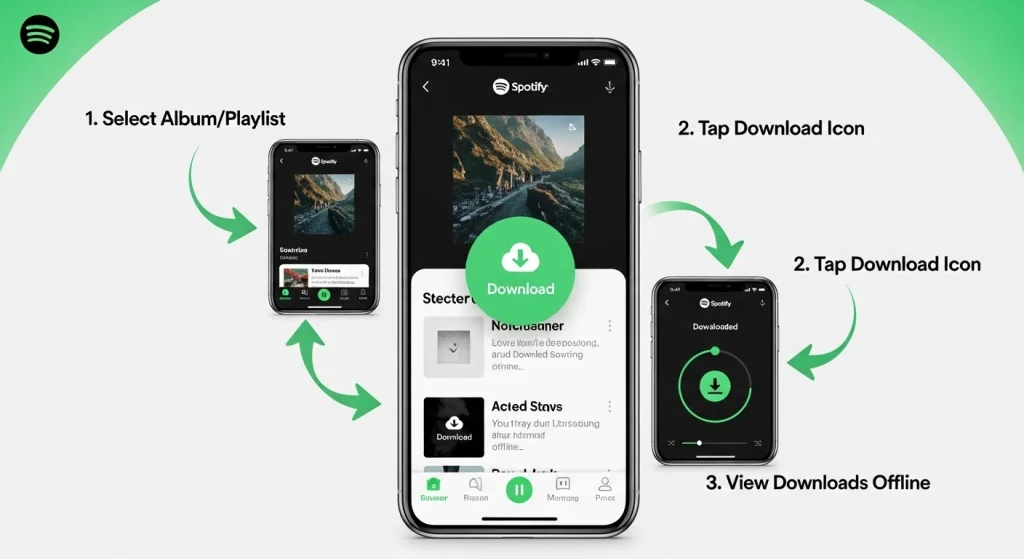
Step 3: Tap the Download Button
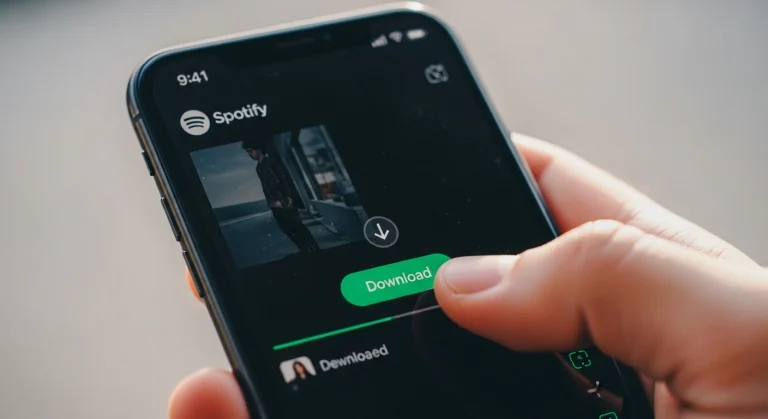
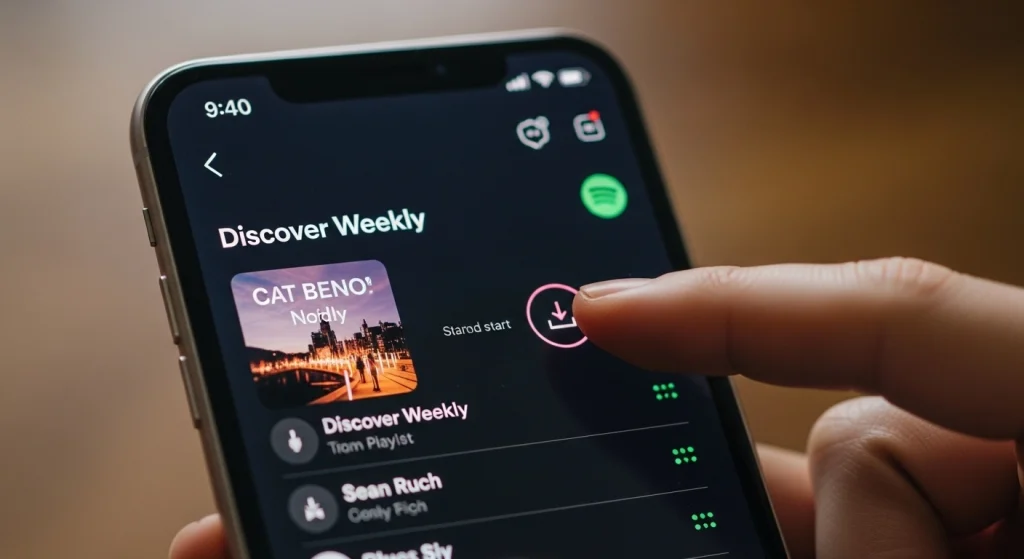
Once you open a playlist or album, you will see a download toggle near the top of the screen. This button allows you to spotify download songs directly to your device for offline playback.
When you tap the download button, Spotify will begin downloading all songs inside that playlist or album. The progress of the download can be seen inside the app as each track is saved locally on your device. Depending on the number of songs and your internet speed, the download process may take a few minutes.
It is generally recommended to download music using WiFi instead of mobile data to avoid extra data charges. Once the download is complete, Spotify will display a small green arrow icon next to the songs to confirm that they are available offline.
Step 4: Enable Spotify Offline Mode
After downloading music, the final step is enabling spotify offline mode. This setting tells the Spotify app to play only downloaded songs and prevents the app from streaming content from the internet.
To enable offline mode, open the Spotify settings menu and navigate to the playback or data saving section. Inside this menu you will find the option to turn on offline mode. Once activated, Spotify will only display and play the songs that have already been downloaded.
This feature is particularly useful when traveling, flying, or entering areas with limited connectivity. Instead of searching for a network signal, the app simply plays the downloaded tracks stored on your device. If you want a deeper walkthrough of this feature and where to find it in the app settings, you can also read Offline Mode on Spotify which explains the feature in detail.
Following these steps ensures that your music remains available anytime and anywhere, making listen to Spotify offline one of the most useful features for regular Spotify users worldwide.
How to Enable Offline Mode on Spotify
After downloading songs, the next important step is enabling spotify offline mode so the app plays only downloaded content. Many users download music but forget to turn on offline mode, which means Spotify may still try to stream songs using mobile data. Enabling offline mode ensures that your downloaded playlists, albums, and podcasts are available without internet access.
When you listen to Spotify offline, the app restricts playback to songs already saved on your device. This helps prevent unnecessary data usage and guarantees smooth playback even when the network connection is weak or unavailable. The process is simple and takes only a few seconds depending on the device you are using.
Enable Offline Mode on Android
On Android devices, enabling offline mode is quick and straightforward. Follow these steps to activate spotify offline listening on your smartphone or tablet.
- Open the Spotify app on your Android device.
- Tap your profile icon in the top right corner.
- Open Settings and Privacy.
- Scroll down to the Playback section.
- Turn on the Offline Mode toggle.
Once this option is enabled, Spotify will play only the music that has already been downloaded. This is especially helpful when traveling or when you want to avoid using mobile data during long listening sessions.
Enable Offline Mode on iPhone
The process for enabling spotify offline playback on an iPhone or iPad is very similar to Android. Spotify places the offline option inside the settings menu, making it easy to activate when needed.
First open the Spotify app and tap your profile icon to access the settings page. From there navigate to Playback Settings and locate the Offline Mode option. Once you enable the toggle, Spotify will stop streaming songs and will only play downloaded content stored on your device.
Many users enable offline mode before traveling or entering areas with poor connectivity. This ensures that playlists remain accessible without interruptions. iPhone users who explore additional Spotify features and playback settings can learn more through Spotify Explained which covers how the app works across devices.
Enable Offline Mode on Desktop (Windows and Mac)
Spotify also supports offline listening on desktop computers including Windows and Mac systems. This is useful for people who download playlists on laptops for travel or want uninterrupted playback without relying on internet connectivity.
To enable offline mode on desktop, open the Spotify application and log into your Premium account. Click your profile icon and open the Settings menu. Scroll to the playback section and activate the Offline Mode toggle.
After enabling this option, the desktop app will only play songs that have been downloaded previously. If you want to understand how Spotify features behave differently on desktop compared to mobile devices, you can explore Smart Shuffle Spotify Desktop which explains how Spotify’s desktop experience works alongside playlists and music discovery.
Spotify Offline Download Limits You Should Know
While the ability to listen to Spotify offline is extremely useful, Spotify also places certain limits on downloads to manage licensing agreements with music labels and artists. These limits ensure that users can enjoy offline playback while Spotify maintains control over its content distribution. Understanding these restrictions helps users avoid confusion when downloading large playlists or using multiple devices.
Spotify allows users to download thousands of songs for spotify offline listening, but the downloads remain inside the Spotify app and cannot be exported as regular music files. This system protects music copyrights while still allowing Premium users to enjoy uninterrupted playback without internet access. Knowing the exact download limits can help you manage your library efficiently and avoid reaching the maximum storage allowance.
Maximum Download Limit Per Device
Spotify currently allows a large number of songs to be downloaded on each device. This makes it possible for users to store multiple playlists, albums, and podcasts for offline playback.
| Limit | Value |
|---|---|
| Maximum Songs | 10,000 |
| Maximum Devices | 5 |
| Offline Check Requirement | Every 30 days |
The 10,000 song limit per device is usually more than enough for most users. For example, a playlist with 1,000 songs would still leave plenty of space for additional albums and podcasts. This generous limit allows users to prepare large music collections for travel, long commutes, or extended offline listening sessions.
Device Limit for Offline Downloads
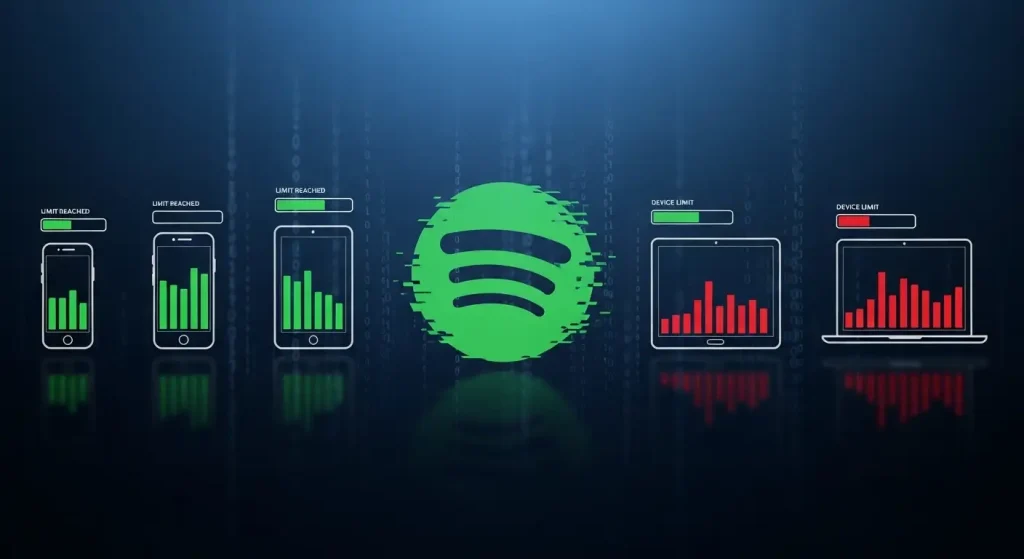
Spotify also limits the number of devices that can store offline downloads. A Premium account can download music on up to five different devices at the same time. These devices may include smartphones, tablets, laptops, or desktop computers.
If a user tries to download music on a sixth device, Spotify will ask them to remove downloads from one of the previously used devices. This prevents accounts from being used on an unlimited number of devices while still providing flexibility for users who listen on multiple platforms.
Many people use different devices throughout the day such as a smartphone for commuting and a laptop at home or work. Spotify’s five device allowance is designed to accommodate this behavior while keeping the service secure.
Spotify License Verification Requirement
Another important rule for spotify offline playback is the periodic license verification check. Even though users can listen offline, Spotify requires the app to reconnect to the internet at least once every 30 days.
This check confirms that the user still has an active Premium subscription and ensures that the downloaded content remains authorized for playback. If the device stays offline for longer than 30 days, Spotify may temporarily disable offline playback until the app reconnects to the internet.
The process happens automatically and usually takes only a few seconds once the device reconnects. After the verification is completed, users can continue to listen to Spotify offline without any interruption.
Understanding these limits helps users manage their downloads effectively while maintaining a smooth offline listening experience.
How to Download Music on Spotify for Offline Listening
Many users want to listen to Spotify offline but are unsure how to download music properly inside the app. The process is simple once you understand how Spotify organizes its content. Premium users can download albums, playlists, and podcasts directly to their device so they can enjoy music without internet access. This feature is especially useful for travel, commuting, or areas with weak connectivity.
Downloading music allows users to enable spotify offline mode and play their favorite tracks instantly without buffering or mobile data usage. Spotify stores these downloads securely within the app, which means the songs remain accessible even when the device is completely offline. Understanding the different ways to download content helps users build a personalized offline library.
Download Entire Albums
Downloading an entire album is one of the easiest ways to prepare music for spotify offline listening. This option is ideal for listeners who enjoy full albums from their favorite artists rather than individual tracks.
To download an album, open the Spotify app and search for the album you want to save. Once the album page opens, locate the Download toggle near the top of the screen. Tap the download button and Spotify will begin saving all songs from that album to your device.
After the download finishes, a small green arrow appears next to each track to indicate that the album is available offline. At this point you can enable offline mode and play the album anytime without internet access.
Download Playlists
Playlists are the most common way users download music for offline playback. Many people create playlists for workouts, travel, studying, or relaxation. Downloading a playlist allows all the songs inside it to be available without streaming.
To download a playlist, open the playlist page inside Spotify and locate the download button near the playlist title. Turn on the download toggle and the app will start downloading every song in that playlist.
Once the process is complete, Spotify will store the playlist locally on your device. This makes it easy to enjoy hours of uninterrupted music when you listen to Spotify offline during long trips or daily commutes. Many users also combine downloaded playlists with discovery features to refresh their music library. Features like Smart Shuffle help introduce new songs into playlists, which you can learn more about in Smart Shuffle Spotify.
Download Podcasts
Spotify is not only a music platform but also one of the world’s largest podcast platforms. Millions of users download podcast episodes for offline listening during travel, workouts, or long drives.
To download a podcast episode, open the podcast show page and select the episode you want to save. Tap the download icon next to the episode title and Spotify will begin downloading it to your device. Once downloaded, the episode can be played without an internet connection.
This feature is particularly useful for educational or self improvement podcasts that people listen to regularly. Many users download multiple episodes before traveling so they can continue learning even without internet access. If you are looking for quality content to download, you can explore curated recommendations in Best Podcasts on Spotify for Self Improvement.
By downloading albums, playlists, and podcasts, users can build a complete offline library and enjoy uninterrupted spotify offline playback wherever they go.
How Much Storage Does Spotify Offline Music Use
Many users want to listen to Spotify offline but often wonder how much storage downloaded music will consume on their device. Since Spotify stores songs inside the app for offline playback, the storage usage depends mainly on the audio quality settings selected during download. Higher audio quality delivers better sound, but it also requires more device storage.
Understanding storage usage is important when planning spotify offline listening, especially for users with limited phone storage. A small playlist may only take a few hundred megabytes, but large collections of downloaded songs can easily use several gigabytes. Fortunately, Spotify allows users to adjust download quality to balance sound quality and storage space.
Spotify Audio Quality and Storage Usage
Spotify offers several audio quality settings that determine how much storage each downloaded track will use. The higher the quality, the larger the file size stored on the device.
| Audio Quality | Approx Size Per Song |
|---|---|
| Low | ~2 MB |
| Normal | ~4 MB |
| High | ~8 MB |
| Very High | ~10 MB |
For example, downloading a playlist of 500 songs at normal quality may use around 2 GB of storage, while the same playlist at very high quality could use 5 GB or more. This difference becomes significant when users download multiple playlists or albums for spotify offline playback.
Spotify allows users to control these settings inside the app. By adjusting download quality, listeners can optimize storage usage while still enjoying good audio performance. Many users prefer normal or high quality because it offers a balance between sound clarity and storage efficiency.
Managing storage is especially important for people who download large libraries to listen to Spotify offline during travel or commuting. Regularly reviewing downloaded playlists and adjusting quality settings helps maintain enough device storage while keeping favorite music available anytime.
Users who want to understand more about Spotify’s streaming technology and playback features can explore Spotify Explained which provides deeper insights into how the platform manages music quality, downloads, and streaming performance.
How to Manage Spotify Offline Downloads
When you regularly listen to Spotify offline, your downloaded songs, playlists, and podcasts can quickly use a large portion of your device storage. Managing these downloads properly helps keep your Spotify library organized while ensuring your device continues running smoothly. Many users forget to review their downloaded content, which can lead to unnecessary storage usage over time.
The good news is that Spotify provides several built in tools that allow users to manage their spotify offline listening library easily. You can delete songs you no longer need, move downloads to external storage on supported devices, and adjust download quality to optimize storage space. These small adjustments can significantly improve how efficiently Spotify stores offline music.
Delete Downloaded Songs
One of the easiest ways to manage storage is by removing songs or playlists that you no longer listen to. Over time users may download large playlists for travel, workouts, or special occasions and then forget about them.
To delete downloaded content, open the playlist or album that has been downloaded and turn off the Download toggle. Spotify will automatically remove the downloaded files from your device while keeping the playlist saved in your library. This helps free storage space without deleting the playlist itself.
Regularly reviewing downloads is a good habit for users who frequently listen to Spotify offline, especially if they maintain large music libraries.
Move Downloads to SD Card (Android)
Android users have an additional advantage when it comes to storage management. Spotify allows downloads to be stored on an SD card instead of internal phone storage, which can significantly increase the amount of music that can be saved for offline playback.
To move downloads to an SD card, open the Spotify app settings and navigate to the Storage section. From there select the option to store downloads on the SD card. Once this setting is enabled, future downloads will be saved to external storage instead of the device’s internal memory.
This feature is particularly helpful for users who maintain large collections for spotify offline playback and want to avoid filling up their phone storage.
Change Download Quality
Another effective way to manage storage is by adjusting Spotify’s download quality settings. Higher audio quality delivers clearer sound but also increases the size of each downloaded track.
Inside the Spotify settings menu, users can change the download quality between low, normal, high, and very high. Lower quality downloads use less storage space, while higher quality settings consume more storage but provide better sound.
For most listeners, the normal or high quality setting provides a good balance between audio clarity and storage efficiency. Adjusting this setting can help users download larger playlists while still maintaining enough storage for other apps and files.
Managing download quality and storage is an important part of maintaining a smooth spotify offline listening experience. Users who want to explore additional playback and feature settings within the app can also review Spotify Explained which provides deeper insight into how Spotify manages music playback and downloads across different devices.
Common Problems When Trying to Listen to Spotify Offline
Many users try to listen to Spotify offline but sometimes encounter issues where downloaded songs do not play as expected. These problems usually occur because of incorrect settings, expired downloads, or missing license verification. Since Spotify relies on secure downloads inside the app, certain conditions must be met for spotify offline playback to work properly.
Most offline listening issues are easy to fix once you understand the cause. In many cases the problem is related to the offline mode setting, outdated app versions, or device connectivity checks. Below are some of the most common problems users experience and the practical solutions that help restore smooth spotify offline listening.
Spotify Offline Mode Not Working
Sometimes users enable offline mode but still cannot play downloaded songs. This usually happens when the app settings are not properly configured or the downloads were not completed successfully.
Here are some practical solutions that often resolve the issue.
- Make sure your Spotify Premium subscription is still active.
- Confirm that the songs or playlists show the green download arrow icon.
- Restart the Spotify application to refresh the playback system.
- Check if the Spotify app needs an update from the app store.
- Turn offline mode off and then enable it again inside the settings menu.
In many situations simply restarting the app or refreshing the download settings can restore spotify offline mode functionality.
Downloaded Songs Not Playing Offline
Another common issue occurs when songs appear downloaded but do not play without internet. This usually indicates that the download was incomplete or the app needs to refresh its stored files.
You can troubleshoot this issue using the following steps.
First open the playlist or album and verify that the green download indicator appears next to each song. If the icon is missing, the track may not have downloaded correctly.
Second reconnect the device to the internet and allow Spotify to refresh the download status. Sometimes the app needs a short connection to verify the files.
Third clear unused downloads and download the playlist again if the problem continues. Re downloading the playlist often fixes corrupted download files.
These steps help restore proper spotify offline listening so downloaded songs play without buffering or internet access.
Spotify Says “You Are Offline”
Some users see a message saying “You are offline” even when they have internet access. This message often appears when Spotify cannot verify the user’s subscription or when the app has not connected to the internet for a long time.
Spotify requires the app to reconnect to the internet periodically to verify the account license. If the device stays offline for more than about 30 days, Spotify may temporarily restrict playback until the app reconnects and confirms the Premium subscription.
To fix this issue, simply reconnect your device to the internet and open the Spotify app. The verification process usually completes automatically within a few seconds. Once the license check finishes, users can continue to listen to Spotify offline without any interruptions.
If you want to understand how offline settings work in more detail and how to configure them properly, you can explore Offline Mode on Spotify which provides additional guidance on managing offline playback features.
Spotify Offline Listening Tips for Better Experience
Many users successfully listen to Spotify offline, but a few simple habits can make the experience much smoother and more reliable. Proper planning helps avoid playback interruptions, storage problems, or missing downloads when you need them most. These tips are widely used by regular Spotify listeners who rely on spotify offline listening during travel, commuting, or daily activities.
Optimizing how you download and manage music ensures that your playlists remain accessible anywhere without buffering or internet dependence.
Download Playlists Before Traveling
One of the best practices for spotify offline playback is downloading playlists before leaving home or entering areas with poor connectivity. Airports, flights, and long road trips often have unstable or expensive internet connections.
Before traveling, open your favorite playlists or albums and download them using a stable WiFi connection. This ensures that your music library is ready for uninterrupted listening throughout the trip. Many frequent travelers prepare multiple playlists so they can enjoy hours of music while completely offline.
Use WiFi Instead of Mobile Data
Downloading large playlists over mobile data can quickly consume your monthly data allowance. A single playlist containing hundreds of songs can use several gigabytes depending on the audio quality settings.
Using WiFi instead of mobile data allows users to download music faster while avoiding additional data costs. Many people download their music library at home or through trusted public WiFi before enabling spotify offline mode for regular listening.
Manage Storage Regularly
Offline downloads can accumulate over time, especially if you frequently download albums, podcasts, and playlists. Without proper management, this can fill up your device storage.
Review your downloaded content regularly and remove songs or playlists you no longer listen to. Adjusting download quality and clearing unused downloads helps maintain enough storage space while keeping your most important playlists available for spotify offline listening.
Alternatives to Spotify Offline Listening
Spotify is one of the most popular streaming platforms, but it is not the only service that supports offline music playback. Several other music streaming services also allow users to download songs and listen without internet access.
Each platform offers different music libraries, pricing structures, and features. Some users compare multiple platforms before deciding which service works best for their listening habits. A broader comparison of streaming platforms is available in Spotify vs SoundCloud which explains how different music services compare in terms of features and music discovery.
| Platform | Offline Listening | Price |
|---|---|---|
| Apple Music | Yes | Paid |
| YouTube Music | Yes | Paid |
| Amazon Music | Yes | Paid |
These platforms also allow users to download music for offline playback, but their catalog sizes, recommendation systems, and subscription costs may vary depending on the region.
Frequently Asked Questions About Listening to Spotify Offline
Can you listen to Spotify offline without Premium?
No, offline listening is only available for Spotify Premium users. Free accounts allow streaming music online but do not support downloading songs for offline playback. To listen to Spotify offline, users must subscribe to a Premium plan that enables downloads and offline mode inside the app.
How many songs can you download on Spotify?
Spotify allows users to download up to 10,000 songs per device for offline listening. A Premium account can store downloads on up to five devices simultaneously. This means users can keep large music libraries available offline on their phones, tablets, or computers.
How long does Spotify stay offline?
Spotify allows offline playback for downloaded music, but the app must reconnect to the internet at least once every 30 days. This verification confirms that the user still has an active Premium subscription and keeps downloaded songs authorized for playback.
Does Spotify offline use data?
No, spotify offline listening does not use mobile data once the songs have been downloaded. Music plays directly from the device storage instead of streaming from Spotify servers. However, downloading songs initially requires an internet connection, preferably through WiFi.
Can you download Spotify songs to your phone?
Yes, Spotify Premium users can download playlists, albums, and podcasts directly to their phone using the download toggle in the app. These songs are stored inside the Spotify application and can be played anytime when you listen to Spotify offline without needing internet access.
Final Thoughts: Is Spotify Offline Listening Worth It?
For many music lovers, the ability to listen to Spotify offline is one of the most valuable features of the platform. Offline listening removes buffering problems, reduces mobile data usage, and ensures uninterrupted playback during travel or in areas with weak internet connectivity.
The feature is especially useful for frequent travelers, commuters, students, and anyone who listens to music daily. By downloading playlists, albums, and podcasts in advance, users can create a reliable music library that works anywhere.
Overall, spotify offline mode provides convenience, flexibility, and better control over data usage. For users who rely heavily on music streaming, upgrading to a Premium plan and enabling offline playback can significantly improve the overall listening experience.